▸ INVENTORY OPENED

The Codex

I launch and improve e-commerce experiences across marketplaces and retailer-owned apps and websites.

ARTIFACT BEARER

GARY / LOADOUT
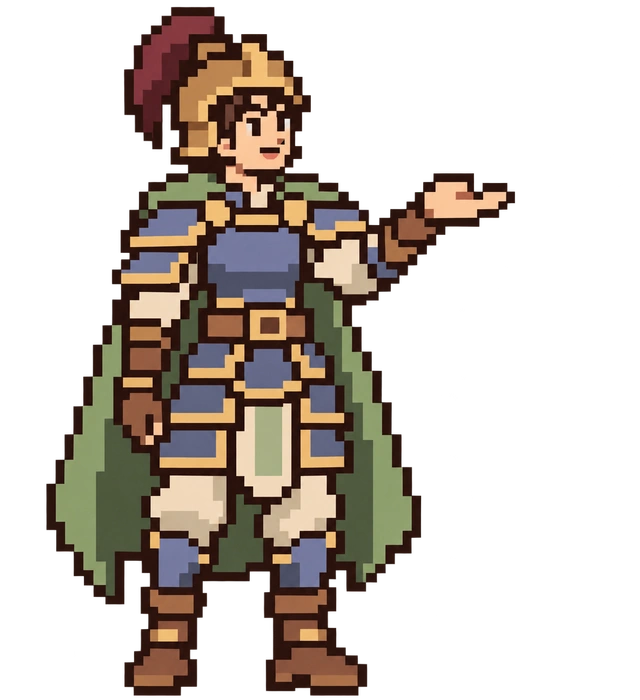
Armored adventurer presenting a raised open palm, with fixed helmet, cape, and boots
Bronze helm
Field armor
Travel boots
ARTIFACT SLOT / EQUIPPEDDelivery Manifest

PROJECT INVENTORY

08 / 08 ITEMS
CODEX ENTRY01 / FEATURED PROJECT
Delivery Manifest / marketplace

On-Demand Grocery Pilot

99 Ranch Market

I helped launch a grocery marketplace pilot by automating catalog delivery and setting up a store fulfillment process. Lessons from the first launch informed the next rollout.

MY ROLE
Marketplace analysis, launch coordination & store enablement
CAPABILITIES
Prioritization · Cross-functional collaboration · Operational learning
Catalog liveAutomated product updates for the pilot
Next rolloutApplied lessons from the first store
FOLLOW THE EXPLORATIONStage 1 of 5

A shared learning curve.

99 Ranch Market brought experience working with established grocery delivery marketplaces. Both teams needed a process that store staff could support. We needed to translate that experience into an approach that both teams could run with limited resources and technical integration.

Grocery added its own complexity: weighted items, different pack sizes, changing inventory, and a physical picking process. Joint working sessions helped us evaluate what assortment could translate to the partner's platform and what would be manageable at launch.

The question was how much integration we needed to operate reliably and learn whether to expand.

Automate selectively.

We concentrated technical effort on catalog delivery and kept the initial fulfillment workflow manual. Open each decision to see the reasoning.

Catalog delivery / Automate the handoff
The choice

We automated catalog updates so the storefront could carry the agreed assortment.

The trade-off: this reduced the integration scope while still requiring joint assortment review and ongoing attention to inventory accuracy. Weekly reviews helped us balance coverage with what we could support.

Fulfillment / Start with a manual workflow
The choice

I worked with store teams on a manual process that could support the initial launch.

The trade-off: a workable initial process with less technical integration, but a continuing need for staff training and careful manual checks.

A launch needs room to operate.

I worked with in-store operations on the practical requirements: making space for the initiative, coordinating staffing, and providing in-person training and support. The catalog workflow and the store workflow had to function together.

I factored in training and on-site support when evaluating store readiness.

Use the first launch to shape the next.

Observation / Different purchasing patterns

The first launch showed that marketplace shoppers bought a different mix of products.

Hypothesis / A better assortment and customer fit

Higher average order value could help support delivery costs. We wanted to evaluate a location whose assortment was better aligned with the partner's customers.

My contribution / Benchmark demand and support needs

I compared insights from other mainstream marketplace channels with internal results to help evaluate the second location. Alongside commercial potential, I considered the ability to provide in-person support and coordinate store readiness.

Observed result / Assortment decisions

We used those observations to shape the assortment and support plan for the next launch.

Going live was the beginning.

We expanded the pilot after the first launch and applied what we learned about assortment and store readiness.

We reviewed unfulfilled items weekly and checked recurring stockouts in stores. Where a store could address availability, we worked with the team on the issue. Where it could not, we evaluated removing the item from the catalog to improve the customer experience.

Differences in purchasing patterns informed assortment adjustments. Lessons from operating the first store helped shape the second launch and the discussion about further expansion.

Use marketplace data to guide the next move, and make sure the store can deliver on it.
Merchant Viewer / product

Video Commerce & AI FAQ

99 Ranch Market

I brought short-form product video to the storefront, designed regional playlists around product availability, and evaluated engagement and repeat purchasing.

MY ROLE
Video placement, regional playlist design, pilot measurement, and FAQ data automation
PARTNERS
UI, Marketing, and a third-party solution provider

Could video answer what product photos left out?

A few studio photos and basic attributes could show the packaging without telling shoppers what came inside or how to prepare the food. We already made TikTok Shop videos that showed those details. I wanted to see whether bringing them to our storefront would help shoppers understand unfamiliar products and give them a direct way to shop.

I worked with our UI team to integrate a third-party platform that hosted our videos and provided the player and product placement features. We used it on the homepage and product pages.

Decisions I led

Regional playlists the team could maintain. I used my knowledge of store operations, the storefront, and how the provider’s platform was configured to organize homepage playlists by region. We could rotate the videos while accounting for differences in what stores carried and had in stock. Grouping playlists by region kept the configuration manageable.

Different layouts for the website and app. On the website, I worked with UI to give featured products space beneath the video. On the app, we used circular previews so shoppers could scan the topics without giving up much of the home screen.

Illustrative layouts · Demo cart

Website

Shoppable videos

Demo cart: 0 items

The website used a horizontal carousel of portrait videos with featured products below. Shoppers could shop directly from a clip.

Mobile app

App home
  • Dumplings
  • Sauces
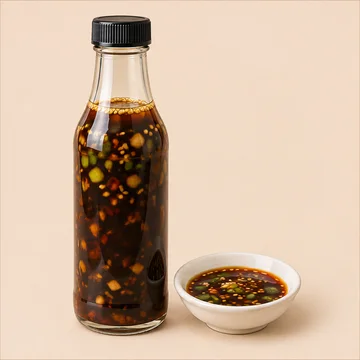
  • Chili crisp
Shop groceries

A row of Instagram Stories-style previews gave shoppers a quick look at the available clips.

What the one-month pilot taught us

I selected a mix of supplier and in-house products to feature in homepage videos. I looked at repeat purchasing by video engagement and compared sales for featured brands with the prior month.

Web + appDesigned distinct video layouts for each surface
One-month pilotCompared repeat purchasing by video engagement

The results gave us a reason to test more placements. Comparing shoppers who chose to engage and comparing sales across months leave other factors in play. A follow-up could assign shoppers to storefronts with and without video during the same period to better estimate its effect.

AI FAQ: solving the catalog bottleneck

I prototyped a way to prepare product information in batches for a product-page FAQ.

The prototype addressed manual data entry. I would evaluate answer accuracy before expanding its use.

Payment Sigil / marketplace

SNAP EBT Integration

99 Ranch Market

I coordinated a marketplace-first SNAP EBT launch and verified that shoppers could identify eligible products before checkout.

MY ROLE
Marketplace launch strategy, partner coordination, and catalog validation
PARTNERS
Marketplace partner, SNAP EBT payment processor, Legal, IT, IS, Accounting, and Finance

Bring in-store payment access online

Customers could already use EBT in stores. Starting on the marketplace let us extend access online and learn from live orders before scoping our own checkout.

Online SNAP was already expanding nationally. USDA reported more than 260 participating retail chains in September 2023 and more than 390 in September 2024, representing thousands of stores. USDA's FY 2025 notes (opens in a new tab) and FY 2026 notes (opens in a new tab) report those dated counts. The USDA retailer directory (opens in a new tab) lists participating retailers by state.

Start with the marketplace

As marketplace manager, I saw that our partner's existing infrastructure gave us a way to offer SNAP EBT online. I worked with the marketplace and a SNAP EBT processor to launch through that channel first. This gave us a way to observe real orders and see how many shoppers were new to us on the marketplace before deciding whether to invest in our own checkout.

Align the approval and catalog handoffs

I coordinated the launch with the marketplace, payment provider, and internal teams.

Before rollout, we checked the eligibility labels shoppers saw online against our product records.

What the marketplace launch showed

Marketplace launchEnabled SNAP EBT for eligible online orders
Catalog validationChecked eligibility labels before launch

The launch gave us a way to observe how shoppers used SNAP EBT online and what to evaluate before adding it to our own checkout.

Operations Handbook / product

DTC Operations & Support

99 Ranch Market

I prioritized back-office requests and turned one-at-a-time promotion setup into batch entry. I also helped consolidate recurring sales reports into one dashboard.

MY ROLE
Internal user research, backlog and roadmap prioritization, AI-assisted automation, and SOP development
SCOPE
Back-office workflows for our app and website across multiple stores

Turn feedback into a prioritized backlog

Setting up campaigns and promotions could mean repeating the same steps across stores. I interviewed back-office users to identify where work repeated, where the process invited errors, and where the software itself was the constraint. I used those distinctions to decide what Operations could address and what belonged on the engineering roadmap.

How I escalated back-office requests

I started with the lightest fix that could solve the problem. If it fell short, I moved the request down to the next level.

  1. Adapt the existing workflow. If the back office could already support the task, I worked with operators to find a simpler way through it using the tools they had.
  2. Standardize the process. When teams did the same task differently, we agreed on the most efficient procedure. I wrote SOPs and user manuals in a shared knowledge base so new hires and colleagues in other departments could follow the steps independently.
  3. Automate repeatable work. When a task followed consistent rules and could run in batches, I used AI to help build scripts or dashboards that Operations could use without changes to the platform.
  4. Prioritize platform changes for IT. When the problem required a change to the platform itself, I ranked the requirement alongside other requests and handed it off to IT for development. This kept roadmap discussions focused on work that needed engineering capacity.

Selected examples of hands-on automation

Promotion setup. I built a batch tool to replace one-at-a-time entry and checked that each discount matched the intended item.

Sales reporting. I helped consolidate recurring reports into a dashboard the team could use to look up results by date and region.

Overall operations result

Batch entryReplaced repetitive item-by-item promotion setup
Courier Purse / growth

Checkout Tips Optimization

99 Ranch Market

I used order data to investigate pickup delays, helped make tipping easier to find on the app and website, and monitored checkout behavior and fulfillment after launch.

MY ROLE
Back-office analysis, checkout optimization, and post-launch monitoring
SCOPE
Delivery checkout on the 99 Ranch Market app and website
Diagnosis

Locate the delay at pickup

I traced delays to the pickup step and used the share of orders with a tip as a baseline for the checkout change.

Hypothesis

Consider what makes an order worth picking up

From a driver’s perspective, expected earnings can affect how attractive an order is. We hypothesized that making tipping easier to find would help customers who already wanted to tip and give drivers more opportunities to earn tips. If that made more orders attractive to pick up, we might see a change in fulfillment as well.

Checkout decision

Make the option easier to find

We updated checkout on the app and website with four groups in mind.

CUSTOMERS
Make it easy to leave a tip if they choose. The service goal was more reliable delivery.
DRIVERS
Give drivers more opportunities to earn tips on the orders they pick up.
BACK OFFICE
Use the order and overtime data the team already reviewed to see how checkout behavior and fulfillment changed after release.
BUSINESS
See whether a checkout change could support better service and reduce overtime, which matters to the cost of fulfilling orders.
Measurement

Track checkout and fulfillment separately

Web + appShipped a more visible tipping option
First-month reviewTracked checkout behavior and fulfillment separately

I tracked tipping and fulfillment separately after launch. For a follow-up, I would measure time from order-ready to pickup, on-time delivery, and checkout completion.

Builder Toolkit / personal

TravelBee

AI-assisted product development · Independent project · 2026

I built TravelBee during my career break to bring a group trip into one place: shared itineraries, day routes, and multi-currency expenses. Claude and Codex supported development and iteration; I owned the product from problem definition through testing.

Explore the TravelBee showcase (opens in a new tab)
MY ROLE
Problem definition, prioritization, UX, implementation, and testing
CAPABILITIES
AI-assisted development · Product scoping · API integration · Iteration from real use
6 travelersUsed the app on a real group trip
275 entriesExpenses logged in the app
17 citiesAcross the shared itinerary
01 / The product

A group trip, in one place.

TravelBee keeps locations, notes, and expenses alongside itinerary events. Travelers can see the day's route, find a place from a rough address, and track spending in the original currency alongside a common USD view.

02 / The toolkit

Tools behind the product.

From finding a stop to keeping the group in sync, each tool supports a different part of the trip.

  1. Find the stop

    Mapbox

    Suggests places, turns addresses into map coordinates, and maps routes between stops.

  2. Check the weather

    Open-Meteo

    Shows location forecasts when an itinerary date is within the forecast window.

  3. Capture the booking

    Claude API

    Extracts booking and expense details from images into fields travelers can review before saving.

  4. Keep the group in sync

    Supabase

    Stores trip data and images, and syncs updates across travelers.

Claude + Codex
Tools I used to build and iterate on TravelBee.
Vercel
Hosts and deploys the showcase.
03 / The decision: assist entry, keep the traveler in control

Copying dates, times, addresses, and confirmation details into events created repetitive work. I introduced image extraction that fills an editable form, with the traveler checking and correcting the details before saving.

In my own use, event creation went from roughly one to two minutes manually to under 30 seconds with photo extraction. That experience informed the design; it was not a controlled benchmark.

04 / Choosing what to build, and what to leave out

I kept expense tracking focused on spending and who paid, leaving debt settlement outside the product. Day maps appear when there are at least two locations, keeping the itinerary central.

A shared link reduced account-setup friction for a trusted group, with access control as a tradeoff. Recoverable deletion gave travelers a way to undo mistakes in a shared plan.

05 / Real use and the next questions

Six travelers used TravelBee on a trip spanning 17 cities and logged 275 expense entries. This gave me a real setting in which to evaluate the workflow.

Next, I would measure how often extracted fields need correction, time to save across booking types, and repeat use beyond the original group.

Research Folio / growth

Cerenity: Testing a U.S. go-to-market strategy

UC Irvine · MGMT 151 group project

For a UC Irvine market research project, my team evaluated how CERA could introduce a portable toilet-seat spray to U.S. shoppers. We recommended positioning the spray alongside seat covers and testing a travel-size format through grocery and e-commerce.

My contribution. In my interviews, shoppers said they would still reach for a seat cover after applying the spray. That helped our team recommend introducing Cerenity as an extra step in a routine shoppers already trusted.

MY ROLE
Contributed to U.S. consumer interviews, survey analysis, and secondary research
FOCUS
Market validation, concept testing, product positioning, and go-to-market strategy

Test how Cerenity would fit an existing habit

We wanted to know whether U.S. consumers saw a need for a portable toilet-seat spray and how it would fit into the way they already used public restrooms. Our hypothesis was that people would be more willing to use the spray alongside a seat cover than to replace the cover with it.

We combined restroom journey observations, one-on-one interviews with U.S. consumers, a Qualtrics survey with 59 responses, and secondary research on the category and competitive landscape. The observations and interviews helped us understand why people kept using seat covers. The survey let us compare reactions to the product concept, formats, and pricing.

Position the spray alongside the seat cover

61%Preferred using Cerenity with a seat cover (36 of 59)
22%Preferred using Cerenity on its own (13 of 59)

Most respondents (54 of 59) did not currently use a toilet-seat sanitizer. That made it especially important to show how the spray would fit into a routine shoppers already followed.

Translate the findings into a go-to-market plan

Product and pricing. We recommended testing a quick-drying, travel-size spray. About 95% of respondents preferred a spray format, and 78% said they were somewhat or extremely likely to buy a travel-size version. We recommended a follow-up pricing test.

Distribution and acquisition. We recommended grocery stores and e-commerce, the survey’s two preferred purchase channels. We proposed product demonstrations on YouTube and partnerships with creators in TikTok’s cleaning community to explain how the spray fits into an existing routine.

A separate B2B opportunity. We also saw a possible route through businesses that provide restroom amenities. Some interviewees said seeing a sanitizer in a stall could make them question how often the restroom was cleaned, so we treated venue placement as a hypothesis to test separately.

What we would validate next

We recruited largely through personal networks, and many respondents were college students from the same area. The study helped us narrow the positioning and launch options. A broader sample across U.S. markets and tests of actual purchases and repeat use would help establish whether those preferences translate into product-market fit.

Gamekeeper Piece / personal

Business in Grey

Game design class · Team project

My team built Business in Grey (BIG) from scratch for a game design class. I helped design the game system, created the assets, and built a playable prototype with the team in Tabletop Simulator.

MY ROLE
Systems design, asset creation, prototyping, and playtesting
PROTOTYPE
Tabletop Simulator

Turn the brief into a playable concept

The assignment gave us a theme, “Big,” and ruled out dice-based movement and RPG stat systems. During ideation, we turned BIG into the name Business in Grey and used large financial stakes as part of the game: one money token represented $5 million. Players ran competing fictional hospitals and had to decide how much risk to take while keeping up with debt payments.

Design the mechanics and build the prototype

I helped design how the game’s mechanics worked together. Patient and action cards gave players different ways to earn money, while inspections and increasingly frequent debt collections put pressure on their choices. I created all the game assets, including cards and tokens. We brought the rules and components together in Tabletop Simulator so classmates could play through the full game.

Playtest the pace and the rules

We playtested with 20 classmates and used their feedback to assess pacing, rule clarity, and whether the mechanics produced the decisions we intended. One session ran over time and stopped in phase seven. The draft allowed up to 11 phases, so the team shortened the game to eight in the final rulebook.

Players also found that earning money could be too easy and had trouble interpreting some trap cards. That feedback surfaced two different design problems: how to make the risk-and-reward choices matter, and how to explain the rules well enough for players to act on them.

20 classmatesPlaytested the Tabletop Simulator prototype
11 to 8 phasesShortened the game after a playtest ran over time

Pitch and present the game

We pitched and presented the game to the class. The final prototype showed how the “Big” theme shaped the game economy, and the rulebook gave players the setup, turn sequence, and win conditions needed to play.

← Choose another project